Why do apps show different calories for the same food?
Why do apps show different calories for the same food? Database sources, product versions, rounding, formulas, and label tolerance explain it.
Your banana is 89 kcal in one app and 121 in another. Your yoghurt has three entries, all with different macros. One barcode scan looks precise; another produces a meal from a country you have never visited.
It is tempting to conclude that calorie tracking is nonsense. The less dramatic answer is that food data is an estimate assembled from several imperfect systems. Apps expose those differences; they do not create all of them.
The question is whether your method is consistent enough to make your intake trend useful. That matters more than trying to make a personal calorie target accurate to the last calorie.
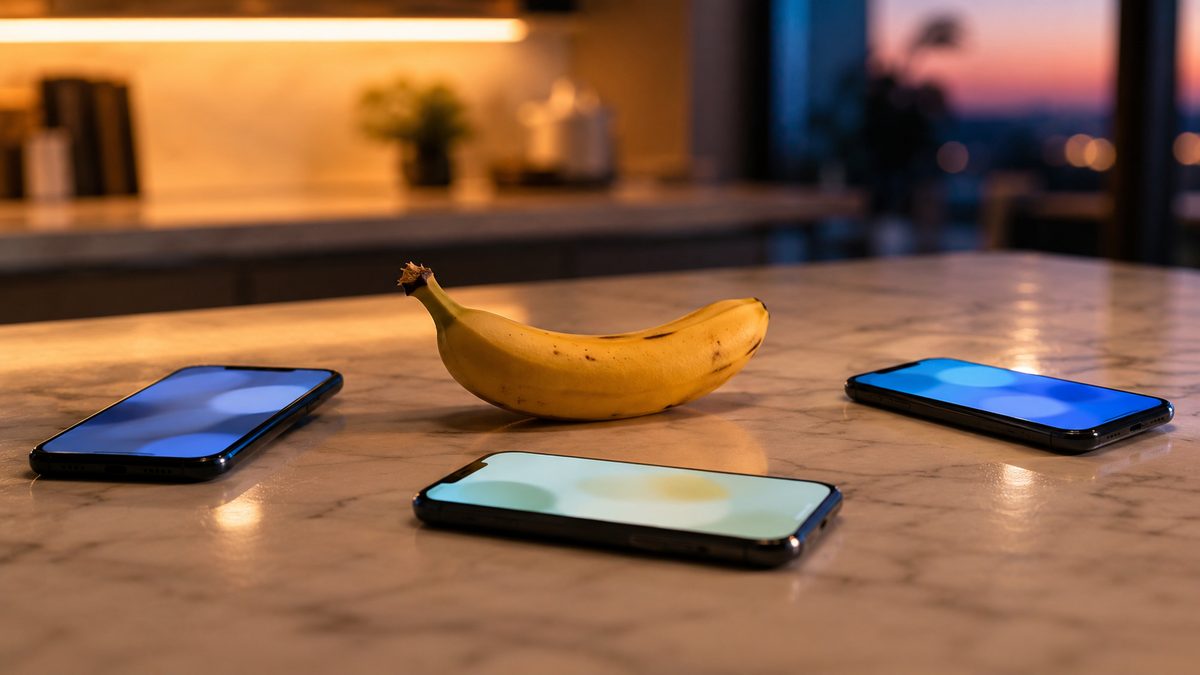
Foods do not come with one permanent calorie number
An apple is not a manufactured object. Its size, variety, ripeness, water content and growing conditions vary. A banana labelled “medium” is a range of edible weights, not a laboratory specimen. So 89 kcal may represent 100 g of raw banana, while 121 kcal may represent a larger standard fruit or a user-defined serving.
Before calling a number wrong, check the boring details: serving size, grams, raw versus cooked state, product country and whether the entry is verified. Our guide on raw versus cooked calories explains why a 100 g serving can be a completely different amount of food after cooking.
The database behind the result matters
Most nutrition apps draw from a mixture of sources. Each has strengths and failure modes.
| Source type | What it is good for | What can go wrong |
|---|---|---|
| Government databases | Generic foods with documented methods | May not match your brand or local product |
| Manufacturer labels | The exact packaged item in your hand | Reformulations and regional versions go stale |
| Open databases | Broad coverage and useful barcode data | Records can be incomplete, duplicated or old |
| User-submitted entries | Niche foods and quick additions | Typos, wrong units and invented serving sizes |
The USDA FoodData Central is a good example of a public reference database: it includes analytical data, survey foods and branded products, but it is not a guarantee that every entry matches a packet in a Spanish or British supermarket. OpenFoodFacts is valuable for product coverage because people contribute labels; that same openness means quality can vary record by record.
Why labels and lab values differ too
Even a laboratory number is not as fixed as it sounds. Calories are usually estimated from macronutrients using Atwater factors: about 4 kcal per gram of protein, 4 per gram of carbohydrate, 9 per gram of fat and 7 per gram of alcohol. Fibre, sugar alcohols and the digestibility of particular foods complicate that tidy calculation.
This is why the calories printed on a label may not precisely equal 4 × protein + 4 × carbs + 9 × fat when you do the maths. The values may be rounded independently, fibre may be handled differently, and the manufacturer may be using permitted calculation conventions.
European rules also recognise that labels are declared values, not guarantees that every packet is chemically identical. The European Commission’s food information guidance sets the framework, while enforcement guidance allows meaningful analytical tolerances around declared nutrition values. That is not a loophole; natural ingredients, production variation and measurement all have limits.
The four checks worth making
Use these checks when an entry looks strange.
1. Compare grams before calories
Most apparent conflicts are serving-size conflicts. “One banana” may be 100 g edible portion in one app and 136 g in another. Change both entries to 100 g before comparing them.
2. Prefer the packet for packaged food
For a branded bar, yoghurt or ready meal, the current label is usually your best source. Scan it if it matches, but read it anyway. A barcode database may hold an older recipe or another market’s product. This is one reason barcode scanning can feel less reliable than it looks.
3. Prefer a reputable generic entry for basic foods
4. Check whether the calories agree with the macros
You do not need exact Atwater arithmetic, but obvious failures are easy to spot. A purported 250 kcal item with 2 g protein, 5 g carbohydrate and 3 g fat is probably missing data. For a clearer explanation of why apps calculate rather than discover calories, read how Tabeku calculates calorie estimates.
Consistency matters more than false precision
If you use the same reasonable database, weigh portions in the same state, and log the oils and sauces that actually matter, a small systematic error does not stop you seeing a trend. If your weight is stable at a reported 2,100 kcal, then 2,100 is your practical maintenance estimate whether a laboratory would call it 2,030 or 2,170.
For complex family cooking, make the ingredients transparent rather than trusting a generic label. A pot of stew has no single authoritative entry; it has a recipe, portions and uncertainty. The practical method is in tracking complex stews without giving up.
What to do when two entries disagree
Pick the entry that best describes what is on your plate, save it as a frequent food if your app allows, and use it consistently. Update packaged entries when the label changes. Do not “correct” yesterday because another database offers a more appealing number.
Precision matters when it changes decisions; beyond that, it is spreadsheet anxiety.
This article is general information, not medical advice. Food labels, databases and app estimates are useful approximations, not individual dietary prescriptions.

Do different calorie results mean one app is broken, or that food data has limits?
Track your meals with AI — snap a photo and get instant calories and macros.
Try Tabeku Free