How much protein do you actually need per day?
How much protein per day do you need? Use your bodyweight and goal to set a sensible target for health, fat loss, muscle gain or training.
Ask how much protein you need and you will get answers ranging from “as much as possible” to “one chicken breast.” Neither is useful.
Protein needs depend on body size, age, training, total calories and what you are trying to change. The goal is not to win a number. It is to eat enough to support your body without turning every meal into a maths exam.
For context, protein is only one part of the picture. Our explainer on macros and why they matter shows why total calories, carbohydrates and fats do not disappear just because protein is having a moment.
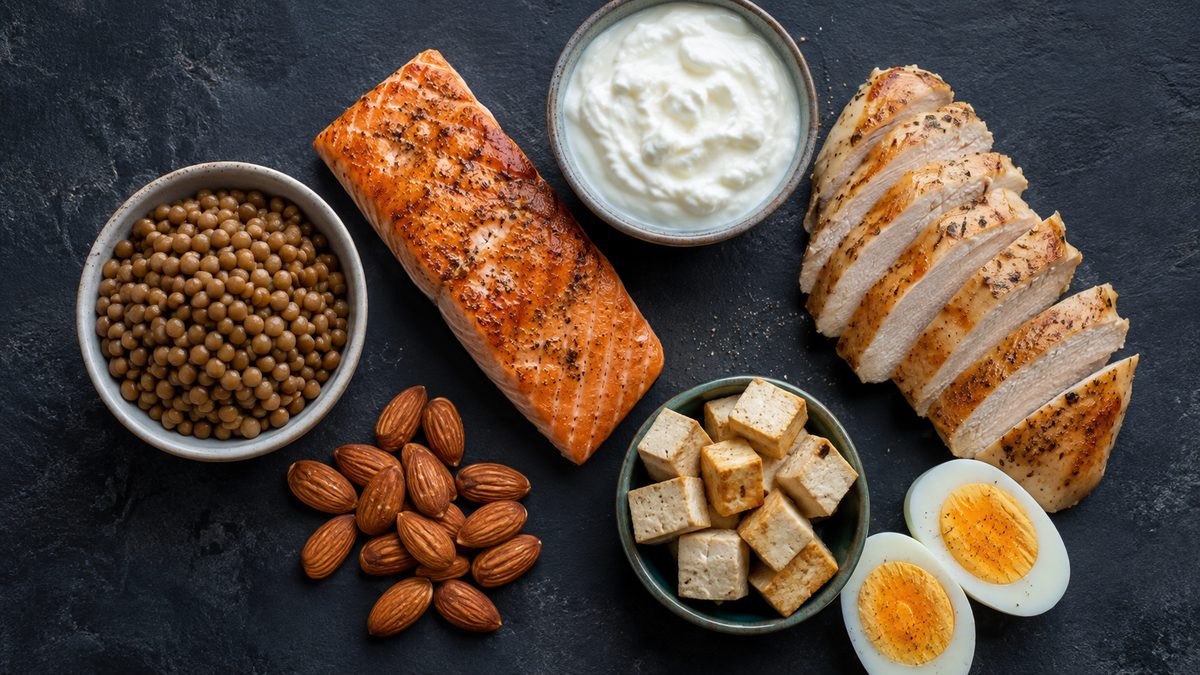
Start with the baseline, then add context
The basic adult reference intake is 0.8 g of protein per kilogram of bodyweight per day. That is a population-level minimum intended to prevent deficiency in most healthy adults, not a personalised prescription for someone lifting weights or dieting.
Protein supplies amino acids to build and repair tissue and make enzymes. For official European reference intakes, EFSA publishes its dietary reference values.
For a sedentary adult maintaining weight, the baseline may be enough. For people who train regularly, are older, or are losing weight, a higher intake is often practical because it supports lean mass and tends to make meals more filling.
| Goal or situation | Useful daily starting range | What it is for |
|---|---|---|
| General health, little training | 0.8–1.0 g/kg | Meeting basic needs |
| Regular exercise | 1.2–1.6 g/kg | Recovery and adaptation |
| Fat loss with strength training | 1.6–2.2 g/kg | Preserving lean mass and satiety |
| Muscle gain | 1.6–2.2 g/kg | Supporting training and growth |
| Older adults | 1.0–1.2 g/kg or individual advice | Maintaining muscle and function |
These are ranges, not cliff edges. Consistency across weeks matters more than a decimal point.
Do the bodyweight calculation
Multiply your weight in kilograms by the relevant range. A 70 kg person who trains two or three times a week might start around 1.2–1.6 g/kg: 84–112 g per day. A 90 kg person in a calorie deficit who lifts could aim around 144–180 g.
If you have a larger body size and a high result feels absurd, a target based on a goal weight or adjusted bodyweight may be more usable. There is no single formula that cleanly handles every body composition. A registered dietitian can individualise this, particularly if you have obesity, are older, or are managing illness.
Protein for fat loss: why it matters more here
In a calorie deficit, your body has less energy available. Without resistance training and enough protein, some weight lost can come from lean tissue as well as fat. Protein is not a guarantee, but it is one of the levers you can control.
First work out a realistic energy target. Then reserve protein within it. Trying to add protein on top of an already unplanned day tends to turn into extra calories rather than a better macro split.
For a fuller explanation of the deficit itself, see how many calories to eat to lose weight. Protein makes a diet easier to hold and helps protect lean mass; it does not override the energy balance.
Protein for building muscle
Muscle is built by training, recovery and adequate energy. Strength training provides the signal; protein provides material.
Spread intake across the day if it makes meals easier. Three meals containing 25–40 g each is a perfectly ordinary arrangement for many people. Others prefer two larger meals and a snack. The exact timing matters much less than total intake, training quality and overall diet.
What counts as protein in real food
Meat, fish, eggs, dairy, soy foods, legumes, tofu, tempeh, seitan, nuts and grains all contribute. Some foods are concentrated sources; others add a useful amount alongside carbohydrates or fats.
| Food portion | Approximate protein | Practical note |
|---|---|---|
| 150 g Greek yoghurt | 15–18 g | Check the label; brands vary. |
| 2 large eggs | 12–14 g | Add beans or toast for a fuller meal. |
| 120 g cooked chicken | 30–35 g | Portion and cooking method change the number. |
| 150 g cooked lentils | 12–14 g | Also provides fibre and carbohydrates. |
| 150 g firm tofu | 18–22 g | A useful plant-based staple. |
Plant-based eating can meet protein needs: include varied sources across the day. You do not need to combine every amino acid on one plate.
Common mistakes that make the target harder
Do not let a protein target displace fibre, fruit, vegetables, fats and sufficient energy. Read the portion, not the “high-protein” marketing.
Another is forgetting that restaurant meals and homemade recipes can be difficult to estimate. If you are logging them, the practical guide to counting calories at restaurants is more useful than pretending every sauce has zero impact.
When to get individual advice
People with kidney disease, liver disease, inherited metabolic conditions, or medically prescribed diets should not adopt high-protein targets from a general article. Pregnancy, breastfeeding and childhood also need individual guidance. The NHS live well information is a reliable starting point for broad healthy-eating advice, but a clinician or dietitian should handle medical context.
Log typical days, check the protein average, then fix the meal that usually falls short. Aim for a sensible range and food you can keep eating.
This article is general information, not medical advice. If you have kidney disease, another health condition, are pregnant, or are considering a substantial change to your diet, talk to a doctor or registered dietitian first.

Would seeing your daily protein total in Tabeku make your meals easier to plan?
Track your meals with AI — snap a photo and get instant calories and macros.
Try Tabeku Free