The traditional food dilemma: how to calculate macros for a stew or paella
Discover why traditional apps fail with home-cooked recipes, the cultural importance of our food, and how AI helps you track it.
For anyone just starting to measure their portions daily, a grilled chicken breast with white rice is the ideal meal: it’s clean, simple, and its macronutrients can be calculated with millimeter precision using a scale. Set your daily calorie target once and meals like that practically log themselves.
But, what happens on Sunday when you visit your family and are served a hearty lentil stew or a generous portion of paella?
Suddenly, classic nutritional math gets extremely complicated. You no longer have isolated ingredients; you are facing a complex, alchemical fusion of reduced broths, fats integrated at high temperatures, shared starches, and varied foods where it is physically impossible to naturally separate and weigh each component individually.
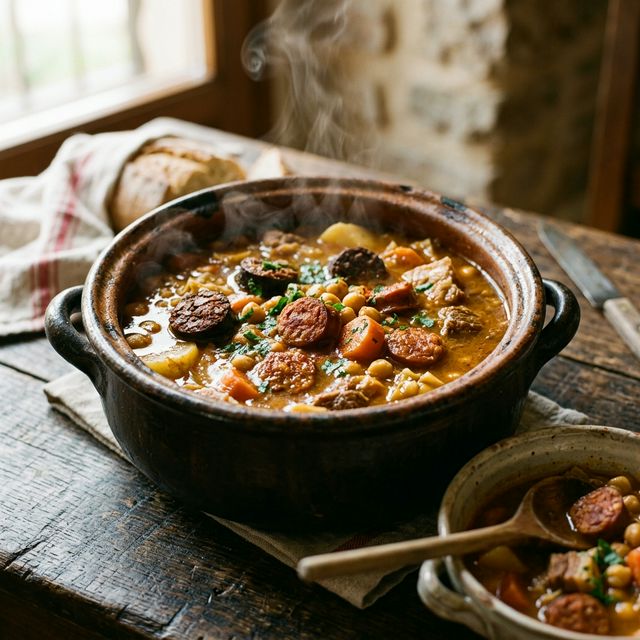
The danger of sacrificing your culinary culture
Isolating meals into simple components (“white rice”, “boiled broccoli”, “lean beef”) is efficient for a bodybuilder preparing for a competition, but it’s a social and cultural disaster for the rest of us.
Traditional food—hearty soups, slow-cooked stews, paellas, and mixed rice dishes—is designed to bring people together socially, utilize local ingredients, and enhance flavor through hours of cross-cooking. Giving up these typical dishes, your mother’s cooking, or your cultural heritage simply because “you don’t know how to track the calories” is one of the quickest routes to dietary abandonment and a poor psychological relationship with food.
Holistic well-being shouldn’t require you to stop being part of family Sundays.
The nightmare of “Create Recipe” in classic apps
The standard method proposed by generic apps to solve this problem is forcing you to become a sad kitchen accountant:
- Weigh the empty pot before starting and write it down.
- Individually weigh each raw ingredient: the pepper, the onion, the garlic, the meat, the legumes, following the same process used to log a homemade recipe.
- Measure with scientific precision the olive oil poured in for sautéing.
- Discount the evaporation factor: weigh the full, steaming pot at the end of cooking, and subtract the tare weight of the cold pot to calculate all the evaporated liquid.
- Calculate the portion ratio: do the mathematical rule of three to know exactly how many grams are in your deep plate.
If just reading this fills you with dread, imagine doing it every time you step into the kitchen. This tedious administrative process destroys motivation.
Why generic search engines don’t work either
The other route is usually giving up and simply searching for the dish in the database of whatever app you use. However, a homemade stew is not a standardized industrial product.
If you search for “homemade lentils” in a generic search engine, the system will offer you dozens of disparate results contributed by different users (ranging from 150 kcal to 800 kcal). The system completely ignores the physical reality of your dish: it doesn’t know how much the broth reduced, whether your family adds chorizo or prefers a purely vegan version, or how much oil was used at the bottom of the pot.
By blindly choosing an option in the database, you’re betting your progress on the culinary habits of a complete stranger on the internet, and you could be altering your caloric log without realizing it.
Tabeku’s conversational and visual solution
Tabeku was born precisely to resolve this cultural clash between technology and real gastronomy. We have integrated multimodal artificial intelligence models (vision and language) designed to reason about complex food just as a nutritional expert would.
Instead of creating cumbersome step-by-step recipes or playing guessing games with closed lists, Tabeku opens up intuitive and organic pathways:
You can describe the dish completely naturally, by voice or typing:
“I ate a pretty deep bowl of my mom’s stewed lentils. They had a couple slices of chorizo, blood sausage, some mashed potato, carrot, and the broth was quite dense and oily.”
The AI semantically analyzes the description, interprets the intensive preparation method, and assigns caloric values corresponding to the increase in fats derived from the sausages in a stew.
Or, our favorite option: take a direct photo of your portion.
Tabeku’s visual models simultaneously evaluate the density and variety of visible ingredients in the stew, the thickness of the sauce, the reflectivity of floating oils, and the total volume of your deep plate. From that amalgamation of data, it generates a realistic caloric estimate and a reliable macronutrient breakdown.
Finally, you can reconnect with your surroundings. Sit down, enjoy good food and your historical recipes surrounded by your loved ones. Send us the photo, we’ll run the numbers so you can focus on living.

Are you still giving up home-cooked food out of fear of messing up your calories?
Track your meals with AI — snap a photo and get instant calories and macros.
Try Tabeku Free