How to read a nutrition label without being misled
Learn how to read a nutrition label: compare per-100g and per-serving values, spot serving-size tricks, check ingredient order and recognise sugar aliases.
Nutrition labels look objective. They are numbers in a box, after all.
But a label can be technically accurate and still make a food seem lighter than the amount you will actually eat. The usual trick is not a lie in the ingredients. It is the serving size.
Once you learn to read the panel in the right order, most packaging stops being confusing.
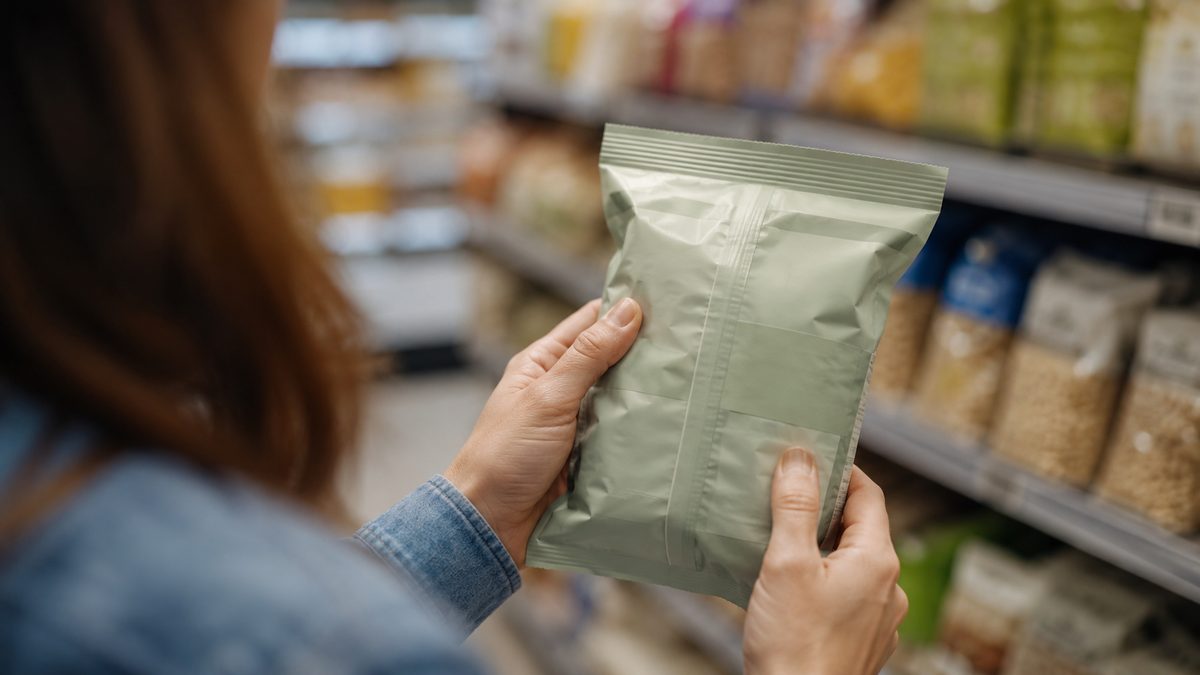
Start with the amount you will really eat
Before calories, protein or sugar, find the serving size and the number of servings in the pack. Then ask one unglamorous question: will I eat that amount?
A small bag of crisps may declare 150 kcal per serving while containing two servings. A drink may be labelled per 100 ml while the bottle holds 500 ml. Neither number is false; neither is the total you consumed if you finish the pack.
This is why comparing food labels against your daily calorie target is useful only after you convert the label to your portion. A precise database entry for the wrong portion is still wrong.
Per 100 g versus per serving
Both columns have a job. Per-serving values describe the manufacturer’s chosen portion. Per-100 g values let you compare foods on the same basis.
| Use this value | When it helps | The trap to avoid |
|---|---|---|
| Per serving | Logging the portion you actually eat | Assuming the suggested serving is realistic |
| Per 100 g/ml | Comparing two similar products | Forgetting that 100 g may not be your portion |
| Per pack | Estimating the whole item | Missing multiple servings hidden in a package |
If cereal A has 380 kcal per 100 g and cereal B has 420, A is more energy-dense. But if you eat 40 g of A and 25 g of B, the bowl-level difference may be small. The portion decides the meal; the 100 g column makes the comparison fair.
Read the panel in a useful order
1. Energy first, but not energy only
Calories tell you how much energy a portion contributes. They matter for weight change, but they do not tell you whether the food is filling, rich in fibre, high in salt or a useful protein source. Two snacks with the same calories can behave very differently in the rest of your day.
2. Check protein and fibre for context
Protein and fibre often make a packaged food more satisfying. If you are unsure why the macro split changes how a diet feels, read what macros are and why they matter.
3. Put saturated fat, salt and added sugar in proportion
Look at the total pattern and frequency. The NHS healthy eating guidance is a useful reality check: overall dietary pattern matters more than finding a single “clean” product.
The serving-size trick is usually a portion problem
Manufacturers may choose a serving that makes the front-of-pack calorie number look modest. The label is required information, but it is not a behavioural prediction.
Be especially sceptical with:
- snacks sold in resealable bags;
- cereal, granola and nut butters;
- sauces and dressings;
- drinks that look like one portion but contain several;
- “high protein” bars with a small serving and a large calorie total.
For a food you eat often, weigh your normal portion once or twice and compare it with the label. That exposes accidental underestimates. Our guide to tracking calories without obsessing is for better information, not permanent surveillance.
Ingredients are listed by weight, not by virtue
The ingredient list is often more revealing than the claim on the front. Ingredients are generally listed in descending order by weight, so the first few tell you what the product is mostly made from.
That does not mean an unfamiliar ingredient is automatically bad or that a short list is automatically nutritious. It does mean you can test the marketing. A berry cereal whose first ingredients are sugar and refined flour is not principally berries because the box is purple.
Look for the source of the food: oats, beans, milk, nuts, vegetables, whole grains. Then look at what follows. The label is a clue to the product’s role, not a court ruling.
Sugar has more names than “sugar”
Sugar may appear as glucose syrup, fructose, sucrose, dextrose, maltose, honey, maple syrup, fruit juice concentrate or molasses. Different names do not automatically make it more dangerous, but they can make added sweetness harder to notice when several appear separately.
The practical question is not whether a product contains a forbidden ingredient. It is whether the product is largely a sweetened dessert pretending to be breakfast, and whether its portion fits the way you eat. The WHO healthy diet fact sheet recommends limiting free sugars as part of the whole diet; it does not require fearing fruit or never eating a biscuit.
Use labels to compare, not to prosecute yourself
Food labels are best at answering small, concrete questions: Which yoghurt has more protein for my usual pot? Which sauce is lower in salt? Is this “single” drink really two servings? They are poor at declaring a person good or bad for eating something.
When you log a packaged food in Tabeku, use the quantity you ate, not the most flattering column on the box. For home cooking, the same principle applies: the label gives ingredients, while the recipe and portions determine the meal. Our guide to logging a homemade recipe explains how to make that estimate without pretending it is exact.
Read the serving size. Compare per 100 g. Scan the first ingredients. Then eat the food, rather than spending twenty minutes negotiating with a label.
This article is general information, not medical advice. If you have diabetes, kidney disease, food allergies or another condition requiring a specific diet, follow advice from your healthcare professional.

Want to turn what is on the label into a meal you can actually track?
Track your meals with AI — snap a photo and get instant calories and macros.
Try Tabeku Free