How much water should you drink a day?
How much water should you drink a day? Skip the eight-glasses myth and use body size, weather, activity, thirst, and urine colour instead.
“Drink eight glasses of water a day” is memorable advice. That is not the same thing as good advice.
Eight glasses is a crude reminder to drink, not a biological target. Your water needs move with your size, temperature, sweat, food, pregnancy and illness. A fixed number cannot cover all that.
The useful question is not “have I reached two litres?” It is: are I replacing the water I lose, consistently, without turning hydration into another thing to optimise obsessively? If you are also trying to understand daily intake, a calorie target based on your own body is more useful than importing somebody else’s rules wholesale.
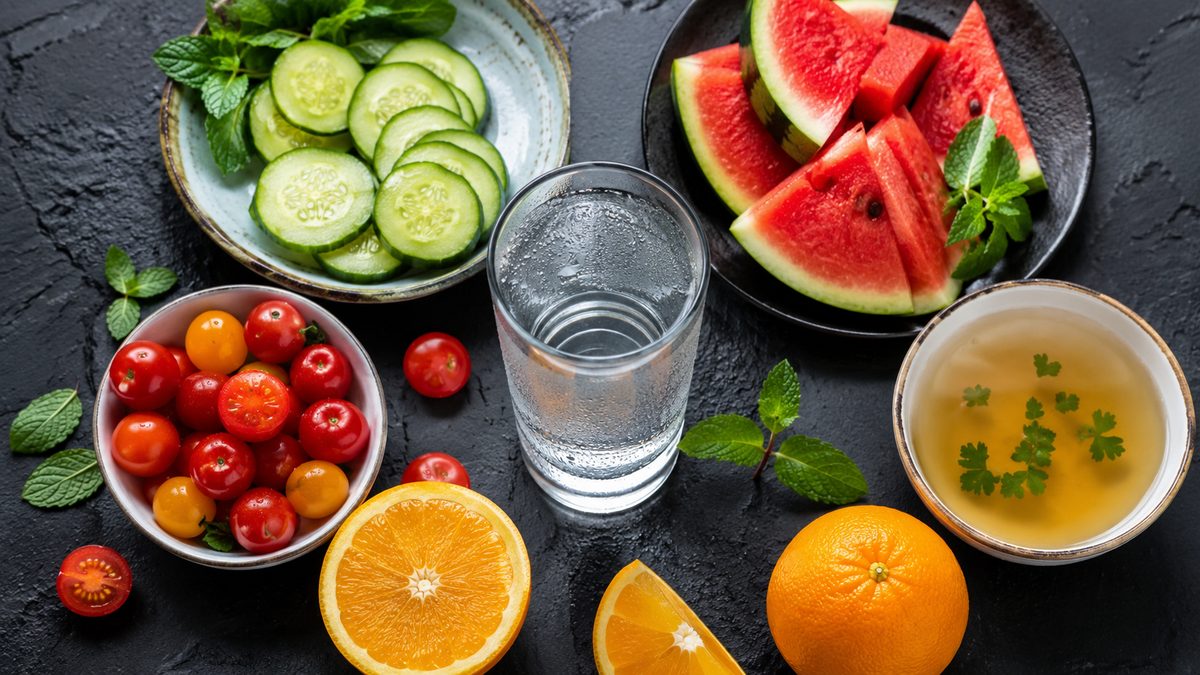
Where the eight-glasses rule came from
The familiar rule is often presented as 8 × 8 oz glasses: roughly 1.9 litres. It is close enough to a reasonable drink total for some adults on mild days, which is probably why it survived. But it is not an official universal prescription.
Public-health guidance tends to be less theatrical. The UK NHS guidance on water, drinks and health suggests six to eight cups or glasses of fluid daily as a guide, while explicitly noting that people may need more in hot weather, when physically active, or when unwell. That is a starting point, not a pass/fail test.
- Water is not the same as fluids. Tea, coffee, milk, soup and many other drinks contribute. Moderate caffeine intake does not magically cancel the water in a drink.
- Fluids are not the same as total water. Fruit, vegetables, yoghurt, porridge and cooked meals all contain water. For many diets, food supplies roughly 20–30% of total water intake.
What actually changes your water needs
No neat equation beats real-world feedback; the biggest variables are predictable.
Body size and food intake
A larger body generally needs more fluid. A petite sedentary adult and a tall active adult should not have the same target, just as they should not get the same ideal-weight reference range.
Food matters: vegetables, fruit, beans, yoghurt and cooked grains supply more water than crisps, cured meat and dry snack bars.
Heat, altitude and dry air
You lose water through sweat even when you do not notice it. Warm weather increases that loss; dry heated rooms and high altitude can increase breathing losses too. A bottle you barely touch in February may be empty by lunchtime in August. That is normal adjustment, not poor discipline.
Exercise and physical work
Sweat rates vary with pace, clothing, heat, fitness and genetics. Hard sessions, manual work and long outdoor days are obvious moments to drink more.
For ordinary exercise, drinking before, when thirsty and afterwards is usually enough. Prolonged or sweaty sessions may also need sodium and carbohydrate. Sports drinks are tools for specific conditions; use a calories-burned calculator for activity context.
Illness, alcohol and some medicines
Fever, vomiting, diarrhoea, alcohol, medicines and medical conditions can change fluid needs; seek clinical advice where relevant.
Thirst and urine colour: useful, not glamorous
People often dismiss thirst as if the body forgot to build an alarm system. For healthy adults living ordinary lives, thirst is a decent prompt. Drink when you are thirsty, drink with meals, and make fluids easy to reach. You do not need to sip on a timer.
Urine colour adds a second, practical signal. Pale straw-yellow most of the time generally suggests adequate hydration. Dark yellow, especially alongside thirst, dry mouth, headache or infrequent urination, is a reason to drink. The NHS uses the same simple cue in its public guidance.
| What you notice | Likely interpretation | Sensible response |
|---|---|---|
| Thirsty, dry mouth, darker urine | You may be behind on fluids | Drink steadily over the next few hours |
| Pale yellow urine, normal thirst | Usually adequate | Keep your normal routine |
| Colourless urine all day, frequent trips | Possibly more fluid than needed | Ease off the forced drinking |
| Dizziness, confusion, persistent vomiting | Could be more than routine dehydration | Seek medical advice promptly |
A practical way to drink enough
Start with habits: drink with meals, keep water nearby, take a bottle on longer walks, and add a drink when it is hot or you sweat. Choose water, tea or coffee most of the time; sugary drinks have calories too.
If you track food, include drinks honestly. A large latte, juice, beer, smoothie or sports drink can be both fluid and meaningful energy. That is not an argument to avoid them; it is an argument to stop pretending they do not count. The same principle applies when you read a nutrition label properly: serving size and calories tell you what is actually in the container, not what you hope is in it.
People with heart, kidney or liver disease may be told to limit fluids. Endurance athletes can also get into trouble by drinking excessive plain water and diluting blood sodium. More is not automatically safer.
The number is less important than the pattern
There is no prize for hitting exactly eight glasses. There is also no advantage in ignoring thirst because an app says you have reached a target.
Use a flexible baseline, notice your thirst and urine colour, and adjust for the day in front of you. Hydration is one of the few health habits that works better when it stays boring.
The aim is enough information for sensible choices, then getting on with your day.
This article is general information, not medical advice. If you have a medical condition, take medicines that affect fluid balance, or have symptoms of significant dehydration, speak with a clinician.

Are you drinking to a rule, or responding to what your body actually needs?
Track your meals with AI — snap a photo and get instant calories and macros.
Try Tabeku Free